



In a monumental shift for global renewable energy dynamics, a newly released government report reveals that India has officially surpassed the United States in annual solar energy capacity additions. This milestone underscores India’s aggressive push toward its ambitious target of achieving 500 gigawatts of non-fossil fuel capacity, a commitment that has completely reshaped its domestic infrastructure. Over the past twelve months, massive solar park commissionings across states like Maharashtra and Rajasthan have driven record-breaking installations, outpacing Western nations that are currently grappling with supply chain bottlenecks and localized regulatory hurdles. Government officials highlighted that simplified policy frameworks, coupled with robust domestic manufacturing incentives, have allowed Indian developers to scale projects at an unprecedented velocity. This rapid deployment not only helps mitigate the country’s historic reliance on coal but also positions it as a primary blueprint for developing nations seeking sustainable industrial expansion. In contrast, while the United States continues to invest heavily through its long-term climate legislative frameworks, it has faced temporary slowdowns in actual grid integration and cross-state transmission line construction. Global climate analysts are pointing to this flip in rankings as clear evidence that the center of gravity for green engineering is moving toward emerging Asian economies. Furthermore, the massive surge in Indian solar infrastructure has dramatically reduced regional corporate carbon footprints, drawing substantial international green bonds and foreign direct investment. Moving forward, the focus is expected to shift heavily toward scaling advanced grid-level battery storage technologies to ensure that this newly generated solar power remains consistent during non-peak hours. Ultimately, this breakthrough marks a significant geopolitical and environmental victory, proving that rapid economic growth and aggressive decarbonization can successfully happen simultaneously.
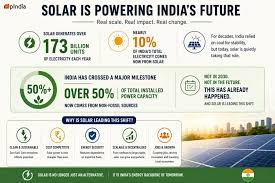
Global Energy Transition: India Outpaces the United States in Solar Capacity Additions

You May Also Like



More From Author

Fed Policy Stalemate: Slowing US GDP Revisions and Sticky PCE Inflation Lock Benchmark Rates “Higher for Longer”